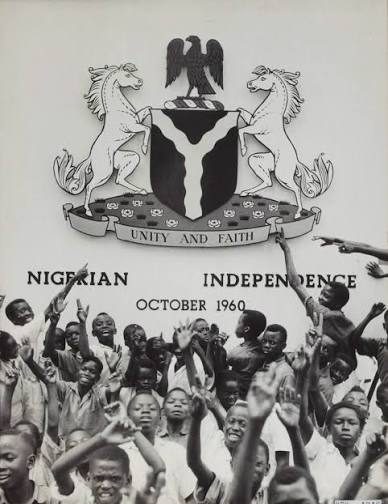
Nigeria has changed considerably since independence on October 1, 1960, but the laws have not always kept up. Some have been amended, some replaced. And there are some still sitting quietly in the statute books, carrying language and ideas from a Nigeria that disappeared decades ago.
So, before we get into the birthday cake and independence speeches, let鈥檚 walk through some of the rules and legal frameworks that have managed to survive 狈颈驳别谤颈补鈥檚 journey from colony to republic, military rule to democracy, and landlines to smartphones.
Punishment for attempting suicide
For years, 狈颈驳别谤颈补鈥檚 criminal laws have treated an attempt to take one鈥檚 own life as an . The provision sits in the , while similar provisions exist under the applicable in parts of Northern Nigeria. It is a striking example of how an old legal approach can remain in place even as the society around it changes.
On August 19, 2026, the Federal Executive Council (FEC) approved a proposed to the National Mental Health Act to remove criminal penalties for attempted suicide. Health Minister Muhammad Ali Pate said the proposed would replace punishment with treatment, protection and support. The government also acknowledged that attempted suicide remains an offence under provisions from the colonial-era Criminal Code and Penal Code.
And on September 10, 2026, the Federal Government that it was taking further steps to decriminalise attempted suicide following FEC鈥檚 approval in August.
The argument for changing the law is fairly straightforward. Someone experiencing a mental health crisis who survives an attempt can end up dealing with the police and the criminal justice system on top of whatever pushed them to that point. The proposed amendment still has to go through the National Assembly, so the law has not disappeared yet. But the fact that the government is now seeking to remove the offence says something about how dramatically attitudes towards mental health and suicide have changed since those provisions were created.
If poverty is a crime
Then there are the dealing with people described as 鈥渋dle and disorderly鈥� or 鈥渞ogues and vagabonds鈥�. And no, these are not referring to thugs or agberos.
These provisions are contained in , with covering a range of conduct including wandering, loitering, and other behaviours considered capable of causing a breach of the peace.
On paper, such provisions may sound like ordinary public-order rules. In practice, legal commentators have long raised about the discretion they give law enforcement officers and the way petty-offence laws can affect people who are homeless, unemployed or otherwise living on the margins of society. A 2017 Guardian of 狈颈驳别谤颈补鈥檚 petty-offence regime noted that jurists had criticised the laws for exposing poor people to exploitation and unnecessary contact with the criminal justice system.
The problem is historical. Vagrancy laws of this kind have in British law, including England鈥檚 . Nigeria inherited the legal tradition and retained parts of it after independence. Legal scholars have since that provisions built around concepts such as the 鈥渋dle person鈥� and 鈥渧agabond鈥� have little place in a modern criminal justice system and should be abolished or substantially reworked.
Come to think of it, a law that was once designed to control movement and public order can have a very different meaning in a country where millions of people work informally, move between cities looking for jobs, and live without the sort of fixed address that the old legal imagination appears to assume.
48-year-old Land Use Act
Not every outdated framework came directly from colonial rule. Some are products of independent 狈颈驳别谤颈补鈥檚 own history, including the
The law changed land by vesting all land in each state in the governor, to be held in trust for the people. It was during the military era to bring greater control and uniformity to 狈颈驳别谤颈补鈥檚 complicated land tenure system. Nearly five decades later, however, the system remains a source of for property owners, developers, farmers and ordinary Nigerians trying to obtain legal title to land.
The is not difficult to find. In March 2025, Vice-President Kashim Shettima said the 48-year-old Act was due for , acknowledging that while it had shaped land administration for decades, it had also contributed to systemic problems that needed to be addressed.
Housing and property experts have also to the slow process of obtaining titles and the difficulty of converting property into usable economic assets. Some have described the Act as obsolete, while others have called for a of the way land is administered.
For Nigerians who have ever spent months chasing a Certificate of Occupancy, obtaining consent, or moving from one government office to another just to establish what they already believe they own, this is probably one of the easier examples to understand.聽
The country has expanded its cities, increased in population, and has a wider property market and larger economy, but land paperwork has struggled to keep pace.
The 1999 Constitution
The Constitution presents a slightly different problem because it is not an old colonial document. The came into force at the end of military rule and has governed since May 29, 1999. Yet the arguments around its structure and origins are as clear as day.
For years, critics have it as a military-era constitution imposed on Nigerians without sufficient popular participation. Former Head of State Abdulsalami Abubakar against that description in June 2026, saying that about 95 per cent of the document was derived from the 1979 Constitution, drafted by civilian legal experts. He said the 1999 Constitution was after a committee headed by Justice Niki Tobi found broad support for the 1979 Constitution with amendments.
That does not settle the argument of whether the constitutional structure works well for Nigeria. Scholars and constitutional reform advocates have raised concerns about the at the centre, the between the federal and state governments, the and the the document. Those debates have produced repeated calls for restructuring, constitutional amendments or an entirely new constitutional settlement.
The document has also been several times since 1999, with the last amendment coming into effect on December 29, 2005.
This series of amendment processes is a reminder that constitutions are not supposed to be museum pieces. The difficult part is agreeing on what should change and getting enough political actors across the federation to agree to change it.
The Big Daily is your weekday shortcut to the biggest news shaping Nigeria. We cut through the noise, connect the dots, and explain why the news actually matters, all in one quick read.
Despite new laws, still the same old police
Nigeria’s policing system carries an even longer history. The Nigeria Police Force , and the remained part of the legal history of the force for decades. A major eventually arrived with the , which repealed the Police Act 2004.
The reform did not end there. In April 2026, the Federal Government new Nigeria Police Regulations after years of recognising that parts of the existing regulations had been overtaken by changes in policing, technology and society. The Ministry of Police Affairs further said the 2026 regulations were intended to outdated provisions and bring police operations into line with the Police Act 2020 and democratic policing principles.
Yet the structure of policing remains one of 狈颈驳别谤颈补鈥檚 longest-running . Nigeria still operates a , while advocates of state police have that policing closer to communities could improve local intelligence and responsiveness.
That means the legal reform conversation has moved from simply replacing old police regulations to asking a much larger question about how policing itself should be organised in a federation of more than 200 million people.
Your workplace laws might be obsolete
狈颈驳别谤颈补鈥檚 , remains the country鈥檚 major legislation on factory safety, health and welfare. But lawmakers have been pushing to replace it, with the sponsor of a 2025 Occupational Health and Safety Bill that the framework has roots in the colonial industrial era and no longer adequately reflects modern workplaces.
Tax law has gone through a similar overhaul. enacted in 2025 replaced and consolidated several older statutes, with the government saying the reforms would simplify tax administration.
The legal profession is another example. In 2025, President Bola Tinubu a bill to the National Assembly seeking to scrap the Legal Practitioners Act. The existing Act was originally , even though the current statute is cited as the 2004 version.
These reforms show that several laws governing Nigerians are being reconsidered because they no longer fit the country鈥檚 current realities. As the country changes, its laws have to change with it.
What happens now?
Nigeria cannot continue to leave its old laws to gather dust. The , formed in 1979, is the institution expected to go through the country鈥檚 laws, spot the ones that have become obsolete or no longer reflect modern realities, and recommend what should be changed or scrapped.
On Wednesday, August 13, 2025, the Commission鈥檚 chairman, Prof. Dakas C.J. Dakas, said the Commission would identify obsolete laws for reform because many of those still on 狈颈驳别谤颈补鈥檚 books date back to the colonial period.
And there is quite a bit to look through. Laws, unlike milk, do not come with an expiry date printed on the packet. So some of them can sit quietly in the statute book for years, even decades, long after the country they were written for has changed completely.
Nigeria at 66 has changed plenty. We have moved from colonial administration to independence, military rule to democracy, landlines to smartphones, paper files to AI, and an economy that keeps inventing new ways to surprise everybody. Some old laws have kept up, either because they still make sense or because they have been amended over time. Others, however, seem to have missed the memo that Nigeria has moved on.
The idea is pretty simple: laws should make sense for the people and the country they are meant to serve. If a law was written for a Nigeria that no longer exists, leaving it untouched can start to feel like trying to use your grandfather鈥檚 1970s map to find your way around Lagos today. You might recognise some of the roads, but good luck with the rest.
After 66 years of independence, revisiting the old laws on the books is part of keeping the legal system in step with the country itself. Nigeria has changed and can’t keep saying 鈥渨e move鈥� while still holding on to everything from the old era.