Written By: Matilda Adegbola
Ernest Okoli was just 19 years old when he held the first major leadership position in his life, which would lay the foundation for the fearlessness with which he operated throughout his career as a journalist and for pioneering the first youth-focused political party in Nigeria. The Nigerian Youth Movement (NYM), founded in Lagos in 1934, is remembered by many as Nigeria鈥檚 first truly national political organisation, uniting young, educated Nigerians across ethnic lines around a shared demand for dignity under colonial rule. NYM鈥檚 remarkable impact was made possible through the efforts of its members, among them Ernest Sissei Ikoli.
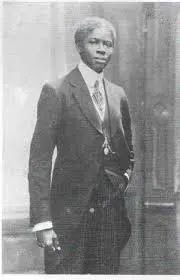
Born in Nembe, in modern-day Bayelsa State, in 1893, Ikoli was educated at Bonny Government School in Rivers State and King鈥檚 College, Lagos. Upon graduation, he served as a mathematics tutor and, in 1913, at 19 years old, as the head of the college.
According to some accounts, Ikoli exited the teaching profession due to a series of altercations over racial slurs and discrimination directed at him and other Black staff by British instructors and administrators.
Driven by an inherent passion for justice and truth, he aligned himself with the cause of free speech, joining the Lagos Weekly Record, a nationalist publication established in 1889 by John Payne Jackson. Serving as assistant editor, he received his journalistic training under the founder鈥檚 son, Thomas Horatio Jackson.
Despite his many contributions during his stint at the now-defunct Lagos Weekly Record, Ikoli was not fully satisfied and wanted to do more in journalism. This led him to begin his own paper, The African Messenger, in 1921, which would later be absorbed into the Daily Times Newspaper, which debuted in June 1926 under the chairmanship of Adeyemo Alakija.
The African Messenger paper served as a vibrant arena for public dialogue, confronting colonial rule and demanding change. Through sharp commentary and rigorous journalism, Ikoli was able to set a standard of professionalism in the Nigerian news industry, strengthening the media’s role as a vital engine within the nationalist movement.
Ikoli鈥檚 journalism stood out for several reasons; chief among them was his locally earned journalism training. This meant he felt the weight of discrimination and neglect more deeply than others who had received their training at a foreign institution.
Records hold that colonial authorities, particularly Sir Frederick Lugard, resented Ikoli鈥檚 style, which was marked by sharp investigative reporting. Ikoli also, alongside his peers in the nationalist movement, fiercely condemned both the 1914 amalgamation of the Northern and Southern Protectorates and the consolidation of colonial rule, believing they would have far-reaching consequences for Nigeria’s future.
The Big Daily is your weekday shortcut to the biggest news shaping Nigeria. We cut through the noise, connect the dots, and explain why the news actually matters, all in one quick read.
The next chapter of Ikoli鈥檚 life was co-founding the Nigerian Youth Movement alongside key figures like Samuel Akinsanya and Jame Churchill Vaughan. Growing out of the Lagos Youth Movement, it bridged ethnic divides to gather educated Nigerians under one banner, actively pushing for self-governance, overhauling education, and promoting equal social rights.
Beginning with protests against the inferior status of local higher education and the exclusion of Africans from senior civil service posts, it quickly broadened into a platform that challenged discriminatory labour practices and called for national unity, expanded opportunities, and greater Nigerian participation in government.
In 1938, following backlash against Herbert Macaulay’s Nigeria National Democratic Party (NNDP) for being too moderate and Lagos-centred, NYM broke the NNDP鈥檚 dominance with an electoral victory and became the main nationalist party. As it grew in influence, the Movement nurtured a generation of politically conscious youths who would later step onto the national stage.
Although Ikoli would come to hold the NYM鈥橲 leadership helm, his appointment proved to be a turning point for the organisation. Kofo Abayomi鈥檚 resignation in 1941 led Samuel Akinsanya and Ernest Ikoli to contest for the seat. Despite Akinsanya winning the election, the party’s executive ultimately appointed Ikoli as leader in what is suspected as a unanimous decision despite the result of the election. This resulted in suspicions of ethnic favoritism and bias within the party, causing a divide within the party and the eventual exit of key members like Akinsanya and Nnamdi Azikiwe, who was Akinsanya鈥檚 primary backer.
A by-election in 1946 saw Ikoli lose his seat. However, he regained it after the results were overturned following a lawsuit. He ran again in the following year鈥檚 general elections but withdrew his candidacy before the final election due to the series of events and the party鈥檚 dwindling reputation of ethnic bias.
He co-founded and served in the Action Group () alongside Obafemi Awolowo in 1951. Following Nigeria鈥檚 independence in 1960, Ikoli鈥檚 years of media and journalism experience were useful in promoting the party. The party introduced free primary education in 1955, founded the University of Ife (Now Obafemi Awolowo University), and established the first television service in Africa, Western Nigeria Television (WNTV). Around the point of Action Group鈥檚 (AG) formation, Ikoli ran The Daily Service, a media publication with a slight leftist outlook.
Ikoli鈥檚 legacy remains that of elevating the media into a powerful engine for public debate and shaping the national conversation. By leading the Nigerian Youth Movement, he ignited a wave of motivation among emerging leaders to fight for self-rule. His efforts within the Legislative Council in 1941 pushed for greater Nigerian involvement in decision-making, setting the gold standard for future democratic advocacy.